Chain-Link Fencing
Chain-Link Fencing in Fresno, CA
Galvanized fence that shrugs off Valley heat — and costs the least per foot.
Chain-link is the workhorse of Central Valley fencing, and there is a reason so much of Fresno is fenced with it. It does not warp when the thermometer sits above 100 degrees for a week straight, it does not rot at the base when a sprinkler head sprays it every morning, and foot for foot it is the least expensive way to enclose a yard, a rental, a shop lot or a few acres.
AR Fence installs chain-link the way it is supposed to go in: terminal and line posts set in concrete at the right spacing for the height, a top rail run through every post to keep the line straight, and the fabric stretched properly before it is tied off. A loose, wavy chain-link fence is a stretching problem, not a materials problem — that part is workmanship, and it is where a cheap install shows itself within a year.
Options
Chain-Link Options
Most residential jobs land on 4 ft or 6 ft galvanized with a top rail. Everything here is worth a conversation at the estimate.
Galvanized mesh
The standard bright finish. Zinc-coated steel that stands up to sun and sprinkler overspray without paint or sealer.
Black vinyl-coated mesh
A black PVC coating over galvanized wire. Visually it disappears against landscaping in a way bright galvanized never does — popular for front yards and pool surrounds.
Heights from 4 ft to 12 ft
4 ft for a front yard or a boundary line, 5–6 ft for backyards and dog runs, 8–12 ft for shops, storage yards and ball courts.
Framework
Top rail for a rigid, straight top line, or top tension wire where you want a lighter, lower-cost run. Bottom tension wire keeps dogs from pushing the fabric up.
Commercial extras
Heavier gauge fabric and pipe, three-strand barbed arms, and drive gates sized for equipment access on yards and job sites.
Gates to match
Walk gates, double drive gates and rolling gates built from the same pipe and fabric so nothing looks bolted on afterward.
Our process
How a Chain-Link Job Runs
- Step 1
Walk the line with you
We measure the run, look at grade changes, and talk through height, gate placement and where the fence has to tie into what is already there.
- Step 2
Free written estimate
You get a price for the whole job — materials, posts, concrete, gates and haul-off of the old fence if there is one.
- Step 3
Utility locates before we dig
Post holes get called in and marked first. It costs nothing and it is the difference between a fence and a repair bill.
- Step 4
Posts set in concrete
Terminal posts first, then line posts on the string. Concrete gets time to set before any load goes on them.
- Step 5
Framework, then fabric
Rails and tension bands go on, then the mesh is stretched tight along the run and tied off at rails and posts.
- Step 6
Gates, hardware and cleanup
Gates hung and adjusted so they swing true, hardware checked, and the site cleared before we ask you to walk it with us.
Why it works
Why Fresno Yards Keep Choosing It
Built for 105-degree summers
Steel does not cup, split or bleed sap the way board fence does in Valley sun.
Lowest cost per foot
For long runs and acreage it is usually the only material that pencils out.
Airflow and sightlines
Open mesh keeps a breeze moving through a yard and lets you see the dog from the back door.
Upgradeable later
A galvanized fence today can take privacy slats next year without pulling a single post.
Our work
Chain-Link Fencing we have built
Our own photography. Captions describe what is in the frame and nothing more.
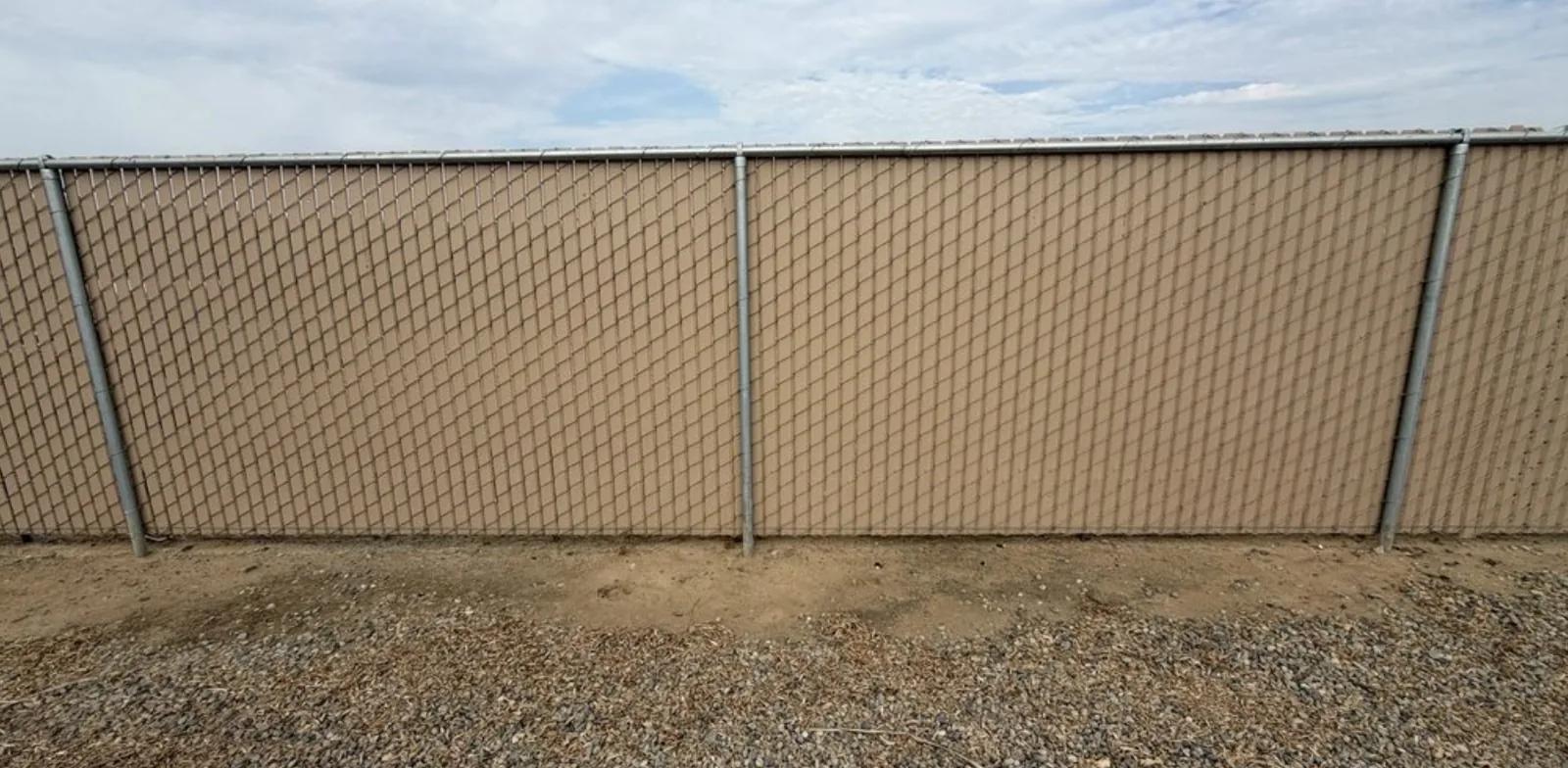
Tan privacy slats woven through galvanized chain-link along a property line, top rail and line posts left bright.
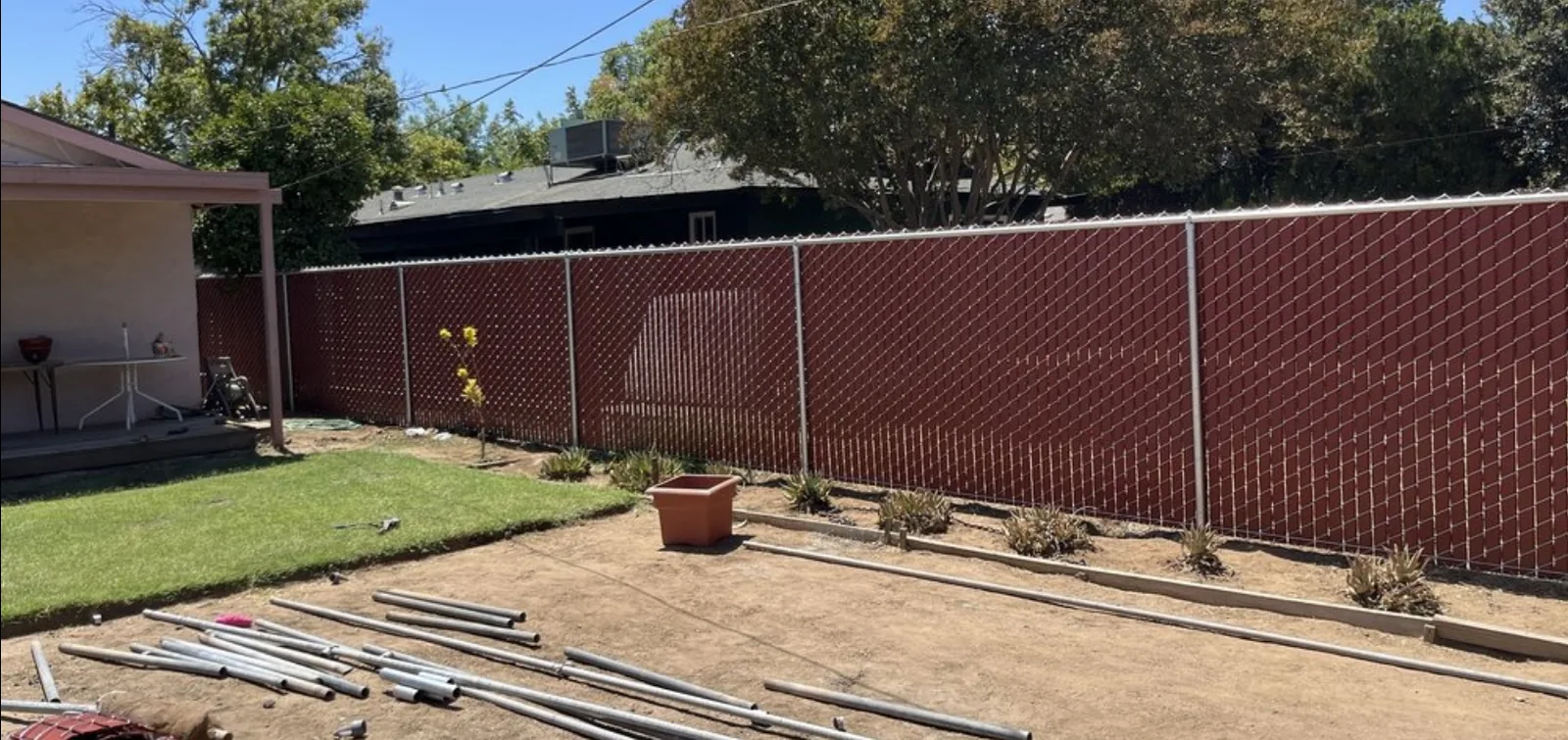
Brown privacy slats enclosing a residential backyard, photographed on install day with pipe still on the ground.
Questions
Chain-Link Fencing FAQs
The questions we get asked most about this kind of work.
How long does a chain-link fence installation take?
Most residential yards are a one- to two-day job, split across two visits so the post concrete can set before the fabric is stretched. Long runs and commercial yards take longer, and we give you the schedule with the estimate.
Can you put chain-link on a slope?
Yes. Chain-link follows grade better than almost any other fence — the fabric is racked to the slope so there is no stair-step gap underneath. Steep drops sometimes need a short retaining detail, which we would flag at the estimate.
Do you remove the old fence?
We do. Tear-out and haul-off of the existing fence is quoted as part of the job so you are not left with a pile of old pipe in the driveway.
Keep looking
Other Fence Types
- Privacy Slat Chain-LinkSlats woven into chain-link for backyard privacy in tan, brown, black, green or gray.
- Wood & Cedar FencingCedar and redwood board fence — dog-ear, board-on-board or horizontal.
- Wrought Iron & SteelBlack steel spear-top panels for security, estate and rural perimeter fence.
- Gates (Swing & Sliding)Custom walk gates, double drive gates and sliding gates in steel, wood or chain-link.
- Motorized / Automatic GatesAutomatic swing and slide operators, keypads, remotes, solar power and safety sensors.
- Fence & Gate RepairLeaning posts, storm damage, sagging gates and re-stretched chain-link.
- Fence Staining & FinishingCleaning, sealing and semi-transparent or solid stain for cedar and redwood.
Get a free estimate on chain-link fencing
Tell us the property, roughly how much fence you need and when you would like it done. We will come out and price it.